By: Fredwill Hernandez
“We no longer have to go to Miami, Fla., to attend a Latin music conference. We now have one in Los Angeles, right in our own backyard,” said Richard Bull, a Latin music veteran, producer, and artist manager. Bull co-founded the Latin Music Month Conference with fellow music executive Andrew Lane, LMM chief operating officer Julio Guerrero, and his management client Chiquis. The conference returned for an expanded second annual edition Sept. 30–Oct. 1, 2026, at the Luckman Fine Arts Complex at Cal State LA, featuring multiple industry panels, masterclasses, showcases—including Soundcheck Live presented by peermusic—the LMM Awards, and an official afterparty.

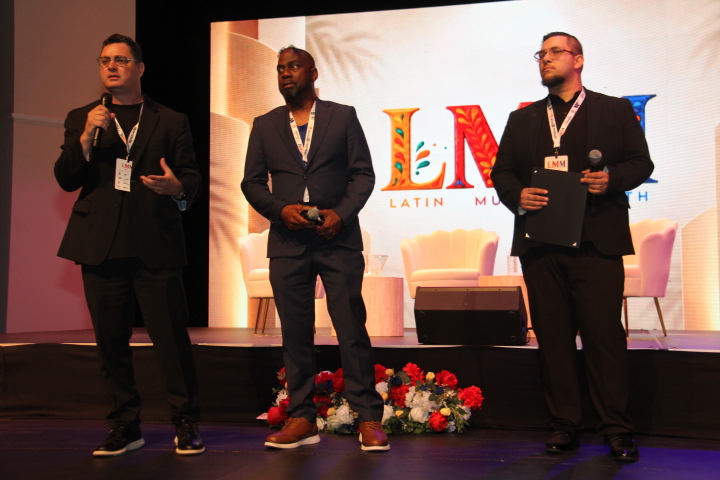
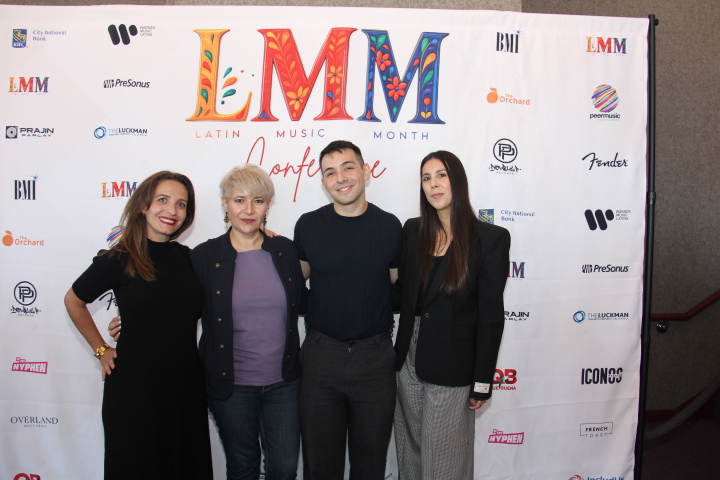
The two-day conference brought together a who’s who of Latin music: artists, executives, creators, entrepreneurs, and industry visionaries gathered to explore the business, culture, and future of the genre. Some took the stage as moderators and panelists, while others made their presence felt simply by attending and making themselves available to students, songwriters, emerging artists, and anyone eager to learn more about an industry they may one day join.
The much-needed conference is, in my opinion, filling a major void in the Latin music space, which has seen significant growth worldwide. Latin music revenue in the U.S. reached $542.2 million in the first half of 2026, marking an 8.6% increase from the previous year and extending a streak of 13 consecutive mid-year gains, according to the RIAA.
Among the eight panels, one explored how PR in Latin music has evolved since the pre-social media era, and how a strategic fashion partnership, for example, can become a defining exposure moment in an artist’s career.
“Mexican reggaeton artist El Malilla made his international modeling debut by walking the runway for fashion designer Willy Chavarria on Jan. 23, 2026, during the men’s fashion week show in Paris, France, where Chavarria presented his Fall/Winter 2026 collection titled “Eterno,” explained Sarah Duru, founder and CEO of French Toast Agency, who was part of “Managing the Message: The Changing World of PR” during one of the four day-one panels.
Over the last three years, Latin music PR and industry marketing have moved beyond the old “crossover” model, in which artists were expected to adapt to English-language pop markets. Today, Latin music operates as a global mainstream force on its own terms. Campaigns increasingly highlight cultural identity, fan communities, and digital performance rather than treating Spanish-language releases as niche or foreign. The growth of Regional Mexican music, alongside continued success in urbano, bachata, salsa, and emerging hybrid sounds, has also expanded the genre’s commercial reach. Publicists and marketers now use ChatGPT, streaming data, social engagement, touring patterns, and audience insights to position artists within specific cultural moments—making Latin music not a crossover story, but a central part of global pop culture. Keeping in mind that Latin music PR still relies on personalized relationships, cultural nuance, and authentic storytelling.
Chiquis’ belief in music as medicine, sound baths, and intentional breathwork inspired a three-day spiritual writing camp in the Palisades in August 2025. The experience helped shape some of the healing-centered songs that later became her albums, Flores De Mi Alma, released Nov. 6, 2025, and Janney, released on April 30, 2026. The retreat also sparked a new musical direction she calls “music medicine,” or “music for the soul,” a theme that led to one of the conference’s most compelling panels.
My story—and the moment I realized music was healing my life in a completely different way—began about two years ago, in 2024. I’ve always been spiritual and connected to chakras, meditation, and energy. But that year, I truly felt something shift within me. For a while, I thought I might stop singing altogether. I wondered if the music industry was still for me. I needed space to step away and reconnect with myself. Then I discovered plant medicine. While it can be taboo in our culture and community, these ancestral practices have existed for generations. For me, they became a powerful part of my transformation. They helped me reconnect with music, my mind, my body, and my spirit in a way I had never experienced before.
I began writing from a deeper place in my soul and realized I didn’t want to stop singing—I simply needed to move in a new direction and create music that reflected my healing journey. That’s how I met Gustavo at a songwriting camp in Malibu last year. I fell in love with the flute and began hearing instruments differently. I started to understand how frequency connects to our energy centers, our chakras, and even our voices. When we sing, listen, and allow ourselves to feel sound, something shifts. Music can reach places words sometimes cannot. It changed my life. For me, music is medicine.
That’s what I want to talk about today, because I love what each of you is doing. Sound has existed since the beginning of time. It is part of nature, creation, and who we are. There is growing research on how sound and frequency affect our bodies, emotions, and well-being. But beyond the science, many of us have felt it personally. A song can make us cry, a rhythm can move us, and a voice can make us feel less alone. That is healing. That is medicine.
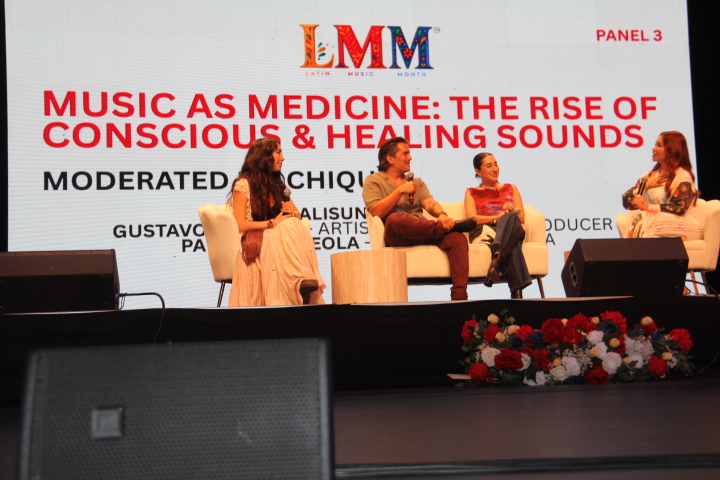
Chiquis shared these reflections during the Music as Medicine: The Rise of Conscious & Healing Sounds panel, which she inspired and moderated based on her personal transformation.
During the panel, singer and songwriter Alisun, daughter of Mexican singer, songwriter, and producer Marco Antonio Solís, shared her perspective on the healing power of music as she continues to forge her own path.
Since I started writing, I feel like I’ve always had the intention of doing something good with what I create. Whether it’s through different genres of sound, there has always been an intention behind it. There has always been a message to share. When I think about creating more medicinal music, I guess it depends on what that medicine means for each of us. For me, it has always started with wanting people to awaken in some way and connect more deeply to themselves. That has been my personal path.
Along the way, though, it has developed with more care and more precision in what I say. I’ve become more mindful about not creating mantras that could reinforce a negative reality. One of the first songs I wrote was called “Mundial.” It’s a song for the world, for the Earth. At first, I wrote it from what I saw already happening in the world: the Amazon being destroyed, animals going extinct, and all of these painful realities. That was the message at the time. Over the years, I changed it into a message that, when you listen to it, can help create a different reality. So over time, I made two versions of the song.
Artificial intelligence (AI) has become so central to the music industry that it is now, in my opinion, a mandatory topic of discussion—or should be—at any modern music conference, even though its use can be controversial, and as the technology advances, the industry continues to wrestle with several major legal, economic, and ethical challenges concerning generative AI music.
During the panel Ask a Lawyer: The Power of a Music Business Attorney, Atty. Marjorie Garcia, a partner and entertainment attorney at King, Holmes, Paterno, & Soriano, LLP, was asked a hypothetical question about AI.

I’m going to throw this one to Marjorie. I write songs all in Suno. I write half the lyrics, and Suno does the rest. Is there anything I should be worried about in terms of copyright? Well, yes. I’m worried about a lot of things with AI.
We should do a whole episode on that. But you can register your original contributions—the parts that you created yourself. It has to have a human touch. And the Copyright Office is constantly updating its guidance on this stuff, so set up a Google Alert or otherwise keep track of how it develops. But currently, you cannot register the part that was AI-generated. You have to identify which parts are human-created and which parts are not.
That doesn’t necessarily mean you can’t commercially use it, at least under that platform’s terms. I believe Suno does allow commercial use in certain circumstances. But you do have to be careful about what you’re declaring. And keep in mind, outside of copyright registration, I’m seeing more and more producer agreements where producers and songwriters have to make representations and warranties that the works are original. If something is being created in Suno, can you stand behind a statement that it is completely original? Not entirely.
So you have to be careful with that, too. For people using platforms like BeatStars, there are a lot of places where you can get in trouble if you’re representing and warranting that something is original when it includes AI-generated material. So just be careful with that.
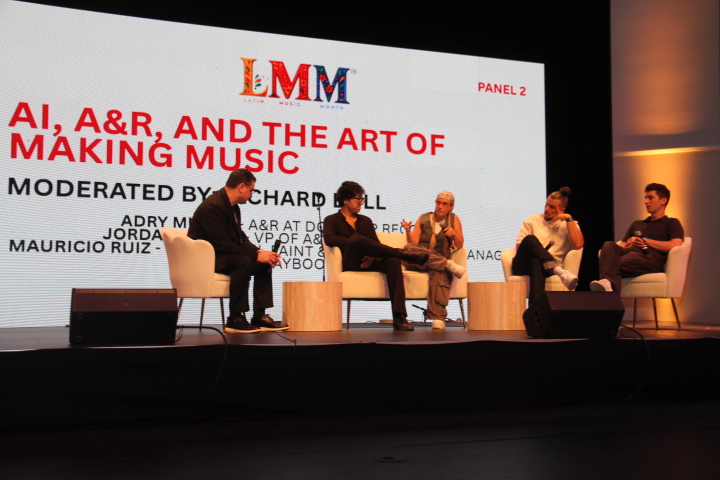
Other perspectives and advice came during the AI, A&R, and the Art of Making Music panel.
One panelist felt that some people probably started using AI as a joke, like, I want to make a song for my mom. Some probably didn’t know how to use a DAW, but as they learned, they began incorporating AI into things like songwriting camps. And since music is subjective, people are always going to have their own opinions.
“Do I personally use AI? I’ve used it for certain things, you know, but I have musicians who record for me, and I also play instruments myself. So I have those options. But there are people who don’t have those same possibilities, you know? They might not play an instrument or have the budget to hire musicians, and that’s why they’re using it. They don’t necessarily have the ability or the budget, yeah,” explained songwriter, producer, and multi-instrumentalist Adrian Cota.
Adri Muñoz, A&R at Double P Records, who piggybacked off Cota’s perspective, stated: “And I’ve seen producers using AI during sessions, exactly as you said, to get a demo together faster. Maybe that can help with the dynamic of a song camp and let the artist hear the song the way they first imagined it, instead of waiting for the producer to record the guitars and then start programming. And I enjoy that craft, too, but sometimes we don’t have the time or the budget for it. I’m talking about song camps specifically.
But the heart of the song is still human, and that’s what I value. When I invite producers to come in, I love seeing them arrive with all their gear, not just their laptops. I love seeing the different instruments they bring. They already have all these ideas in their heads: how they imagine that artist’s sound, what they want to propose, and which instruments they want to try. But they’re still working with elements that feel organic and real. So I think AI has a place as a tool in song camps. Yes, it can help us get there faster, especially when time and budgets are tight. But it shouldn’t replace the real thing.”
Each day featured two networking intermissions. The first intermission on day one included live auditions presented by Fender and PreSonus, with judges Edgar Rodriguez of Voces Del Rancho/Yellow Room Music; Raymond Tapia, Downtown’s VP of A&R Latin; Alejandro Leon-Nava, A&R at Prajin Parlay/Double P Records Publishing; and Paul Montes of Dr. Dre’s Aftermath and The Pharmacy Studio.
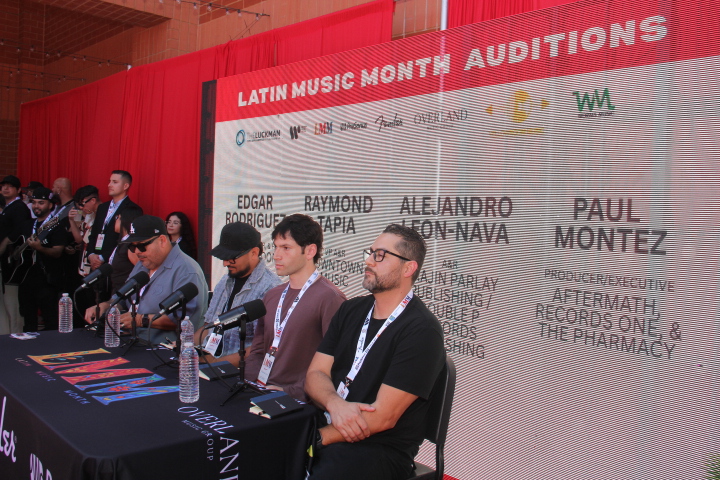
As to how the auditions came about Guerrero explained, The auditions were an exciting part of this year’s conference because they gave emerging musicians an opportunity to showcase their talent in front of industry professionals. Participants registered through our website, and we reviewed submissions to select the top 15 musicians. The goal was to create a real opportunity for artists to be seen, heard, and potentially make connections that could help advance their careers. We wanted the process to be accessible while maintaining a strong level of talent and preparation.
Arturo Villarreal, one of two audition winners, took home a Fender guitar and bass, along with a PreSonus AudioBox 96 Studio 25th Anniversary Edition. Reflecting on the conference and the opportunity to perform, the singer-songwriter shared:
Honestly, the conference was one of the experiences I’ve enjoyed most. It’s such a special space where, as an emerging artist, I can connect with people who are already established in the industry, learn from their experiences, and simply talk as fellow artists while getting to know one another. The auditions were also a great opportunity to share my talent as a singer-songwriter. I left with new friends and colleagues, including people I’m excited to collaborate with soon.
I’m really glad I got to be part of this experience and meet so many interesting people in the industry. There aren’t many spaces where those connections happen so naturally and easily, and that’s what made this conference so special to me.
Showcase Soundcheck, the official day-one after-party, took place at the Paramount in LA. Presented and sponsored by peermusic, the event featured performances by the likes of Anasof, Jona Camacho, Moon La Teacher, Dseiko, and Santiago Shaheem.
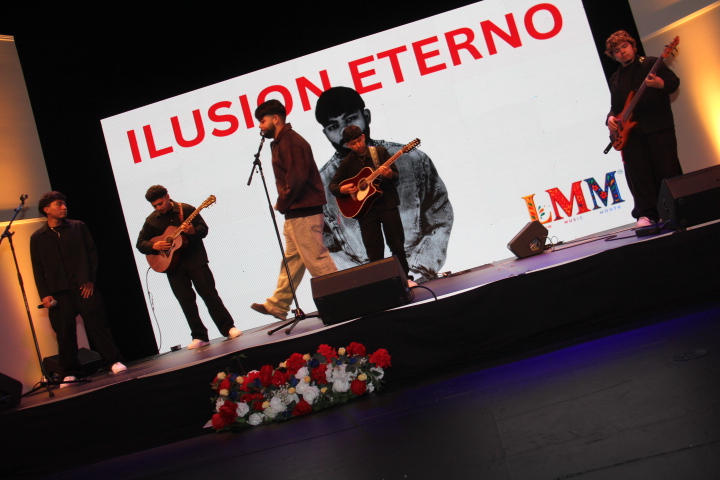
Between panels and networking breaks, the conference featured dedicated sets by Silvi, Wonderfox, ¿Qiensave?, Monokoi, and Ilusion Eterno. Day 2 intermissions featured Susana Ballesteros and Ivana & Papagodi, while David Segura led a live master class walking attendees through “How I Mixed That Hit Song.”
Continuing a tradition established at its inception, LMM presented several awards throughout the conference. This year’s honorees included Mario Quintero Lara, frontman, vocalist, and songwriter of Los Tucanes de Tijuana, who received the LMM Artist Icon Award for his and the group’s contributions to Regional Mexican music. His achievements include an extraordinary catalog of more than 600 songs, more than 20 million albums sold, a Latin Grammy, and more than 30 BMI awards, including Songwriter of the Year and the BMI Presidential Award. The birth of Los Tucanes was Mon., May 13, 1987, at Raza’s Club in Tijuana, B.C.
During his acceptance speech Lara elaborated:
I think we’re at a very important, very interesting moment for Latin music. In our case, that means regional Mexican music, which has given us so much. And we have the blessing of social media, which allows us to share and promote our music in real time. So use social media the right way. Don’t get discouraged. Be persistent. Keep at it. Stay disciplined. Appreciate what you have while you work toward what you want. That’s very important.And remember: don’t spend your time worrying about things you can’t control. What we can control is our own decisions. That’s why we need to make those decisions thoughtfully, with a plan. Every action creates a reaction. Before you make a decision, take the time to think about it and what might come from it.
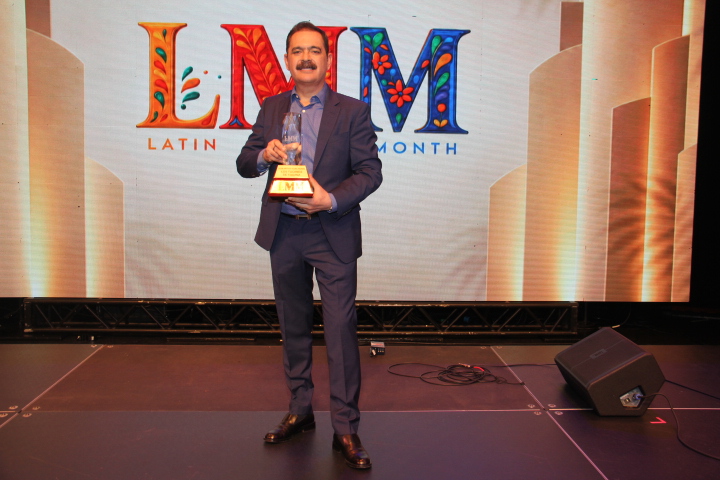
So, what can I tell you? I’m incredibly proud of my bandmates in Los Tucanes de Tijuana. They’ve given me the opportunity to keep producing the band, and they continue to embrace my songs. Above all, I’m grateful to the audience who have connected with our music. We’ve been able to maintain that relationship, that bond, that communication through music. For us, music is more than a blessing. It’s like our religion. We’re incredibly grateful, happy, and excited—especially to be here receiving this recognition. Thank you so much to Latin Music Month for this wonderful work and for giving us this platform. I truly congratulate you for making this happen here in Los Angeles. There’s no doubt that it will benefit all of us.
Honestly, it’s wonderful work. So let’s give life our best. Let’s enjoy ourselves, enjoy music, and recognize how much we can accomplish when we come together as colleagues. I’m very happy that our regional Mexican music scene is much more collaborative these days, and not as competitive as it used to be. Before, we didn’t collaborate much as musicians and regional Mexican bands. Now we’ve learned to work together, combine our talents, and blend genres. And that’s really cool, because it gives us the chance to grow, discover new things, and keep moving forward.
There’s a song we did with DJ Deorro and Mafio called “Yo Las Pongo.” It took three years to make that song happen. What were we trying to do? We wanted to create a song where Deorro could keep his identity as a DJ, Mafio could keep his urban music identity, and Los Tucanes could stay true to the essence of regional Mexican music.Three genres—so how do we make that work? We shared ideas. We had a lot of meetings. We took the time to figure out how to bring those sounds together without losing what made each of us who we are. In the end, we came up with “Yo Las Pongo.” And now it’s one of our most requested songs—a song that has come to rival “La Chona.”
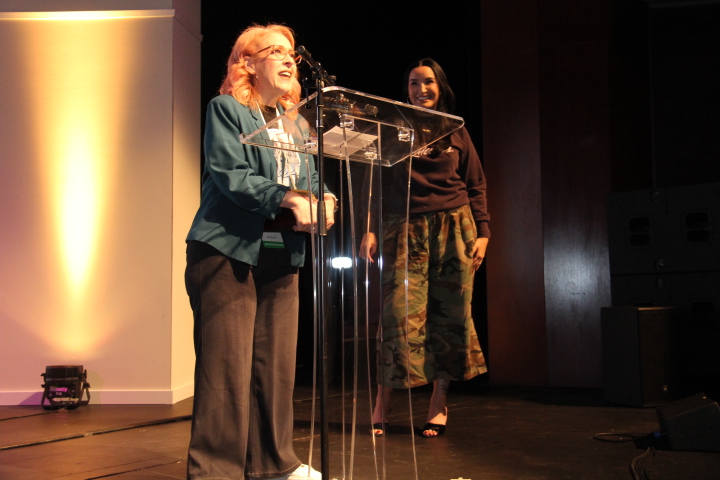
Other honorees included peermusic’s Yvonne Drazan, VP, West Coast, Latin, who received the Executive of the Year Award; DJ, songwriter, and producer Deorro and Hector Crisantes, who each received a Soundmaker of the Year Award; Chiquis, who received the Raíces Award; Miguel Lopez Ixta of Cowboy Consulting, who received the Agency of the Year Award; and Jose A. Leyva, who received the Opus Award. Latin music journalist Lucas Villa was honored with the Media Impact Award, while Sebs and John de la Casa received the Filmmaker Award. Pepe Garza received the Golden Ear Award, Janette Villafana was recognized with the Best Independent Journalist Award, and Fernando Hurtado was honored with the Pulse Award.
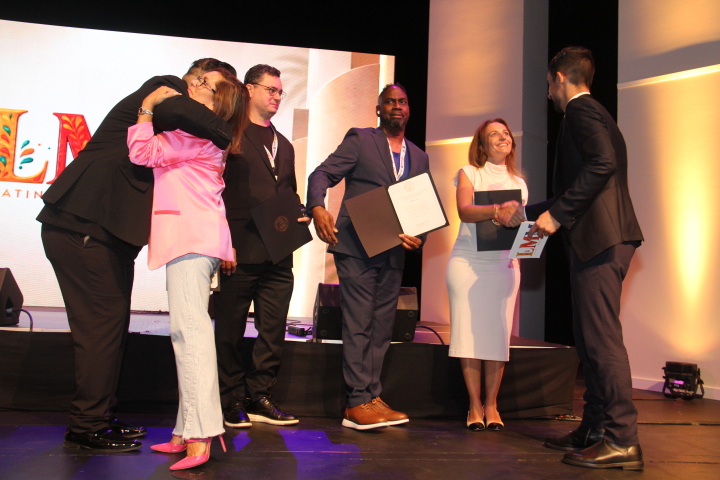
Luisa Acosta, Associate Vice President for University Advancement at Cal State LA, and Nicholas Mestas, Executive Director of the Luckman Theatre, praised the conference, its co-founders, and planning committee, as well as several of this year’s award honorees. They also presented proclamations on behalf of the University. The conference ended as it began, with enthusiasm and excitement, closing on a high note with plans already under way for next year’s event.