By: Fredwill Hernandez
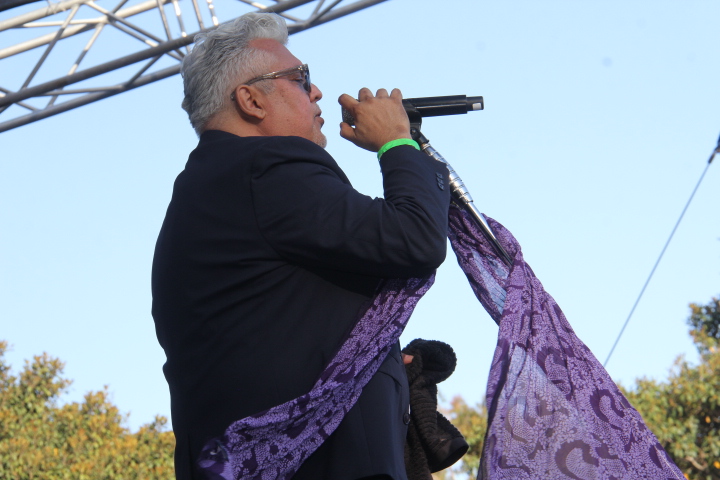
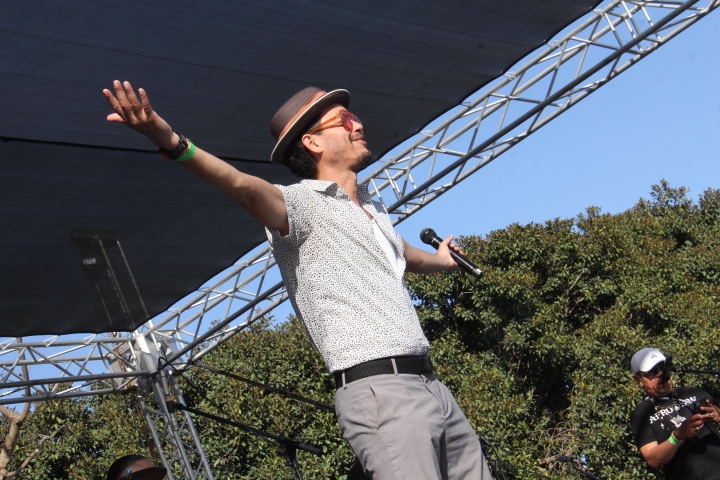
Once again, Fiestalegre hosted its 32nd annual and highly anticipated Día de San Juan Puerto Rican Festival, held on Sunday, June 7, at Rainbow Lagoon Park in Long Beach, CA. The festival featured performances by Frankie Vasquez, Flaco Navaja, Bobby Escoto y Conjunto Afro Son, Martin Cache y La Obsesion, and Juan Karlos y Sangre Nueva. They played, danced, and sang, and some, like Frankie Vasquez and Flaco Navaja, paid homage to “Los Soneros de la Salsa.”

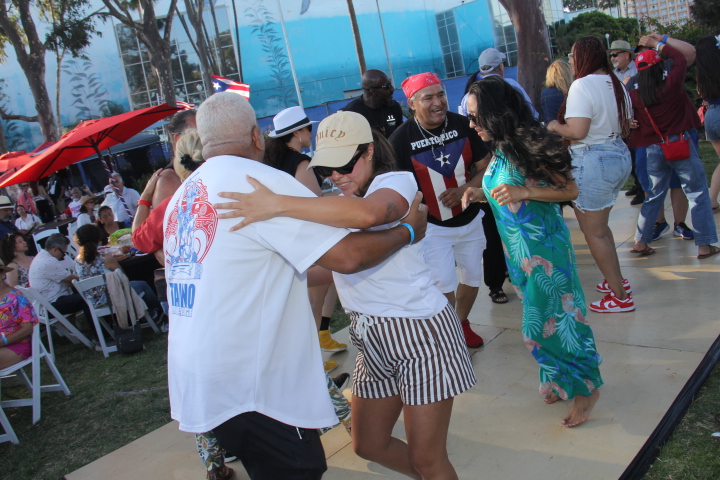
“The core inspiration was a desire to bring the community together to celebrate Puerto Rican culture. For many diaspora communities, cultural festivals serve as a vital bridge to preserving heritage, sharing music, dance, and food, and passing these rich traditions down to younger generations. By creating a dedicated space for this celebration, the festival became a cultural anchor for the Puerto Rican community in Southern California,” explained Benny Garcia, who was born in New York City, a historic hub for the Puerto Rican community, but was raised on the island itself, where his love for our culture, music, and traditions was deeply rooted.
The festival was the brainchild of Garcia and his daughter, Linda Grisby, who first hosted the festival in 1994 at the scenic Frank G. Bonelli Regional Park in San Dimas, CA, for about a decade.
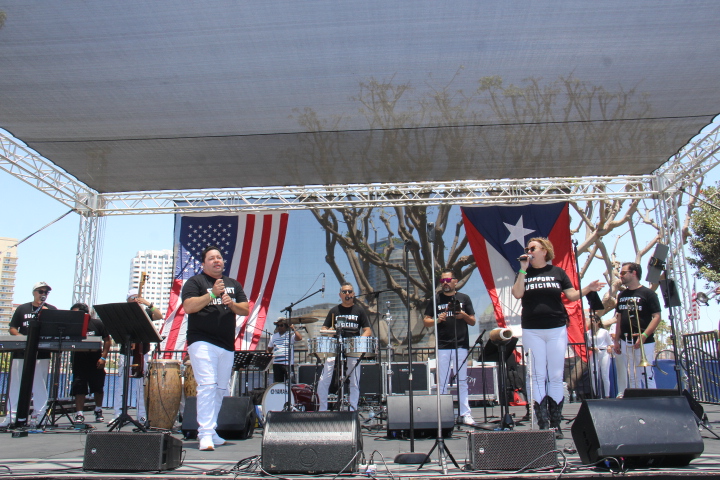
“This beautiful lakeside venue provided a sprawling space for families to gather, cook, and celebrate,” Garcia eloquently explained. He held the festival there for ten years before its move to Long Beach. “After those ten years, the festival transitioned to Long Beach, sharing its vibrant culture at waterfront venues like the Queen Mary Events Park and Rainbow Lagoon Park, which offered more central access for broader Los Angeles and Orange County communities.”
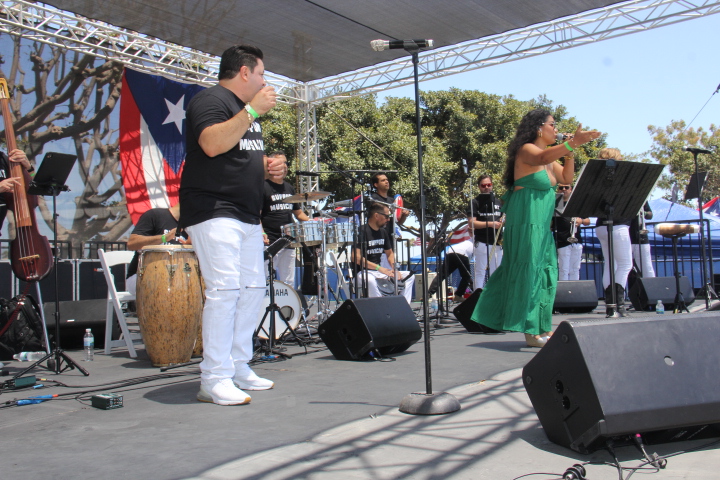
For many Puerto Ricans living in Southern California, this festival is a vital bridge to the island. For one beautiful weekend, they get to step into a space that smells, sounds, and feels like home. The warmth, the laughter, and the sheer joy of the community coming together create an energy that is absolutely contagious.
One veteran salsa vocalist who helped bring that contagious energy through music was Frankie Vazquez, known to fans as “El Sonero Del Barrio,” and backed by Bobby Escoto y Conjunto Afro Son, a mainstay of salsa music in Los Angeles, California.
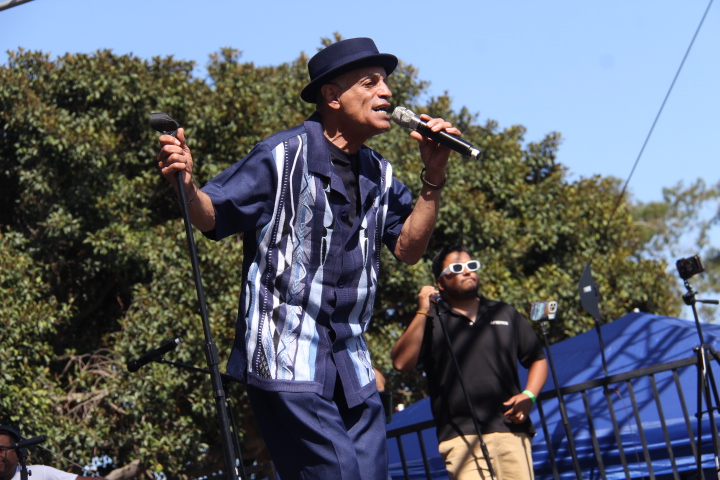
“Well, I’ll begin by saying that Hector Lavoe was the man who inspired me, although I had many inspirations: Ismael Rivera, Pete “El Conde” Rodríguez, Miguel “Mike” Quintana, Ismael Miranda—far too many to mention. I was born in Salinas, Puerto Rico, but grew up in New York, where I learned my craft and began my journey,” Vásquez explained.
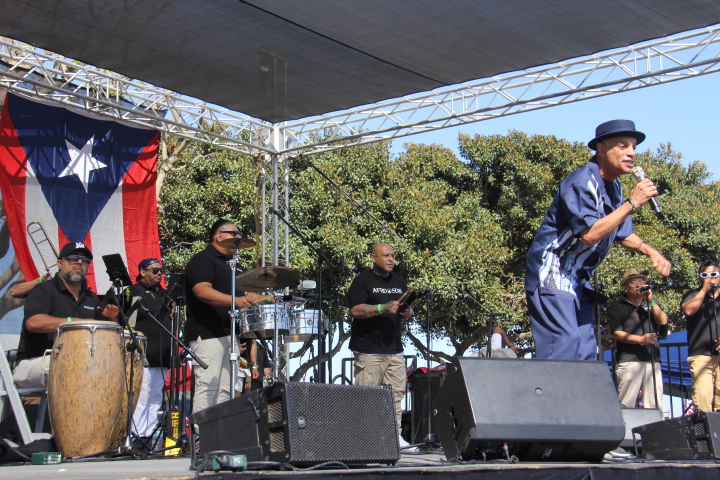
He was brought to New York at six months old and remained there until he was 12, when he returned to Puerto Rico for school. After graduating in 1976, he went back to New York and began his singing career with the salsa band Fuego 77.
“I performed with many bands during my 51 years of experience, including Spanish Harlem, the Lebrón Brothers, Ray Barretto, Conjunto Libre, the Mambo Legends, and Tito Puente. I started as a conguero and eventually became a singer, realizing that audiences often paid more attention to the singer. The energy I receive from my fans is the same energy I give back. Seeing them enjoy themselves is powerful, and that is what makes me one of the top soneros. The people say it—I’m simply the humblest person. I loved being here, and I hope I return and that Benny brings me back, because everyone seemed to have a wonderful time.”
The motivation to make the yearly festival happen, Garcia added, is strong. “Yes, there are obstacles, logistics change, venues move, and costs rise. But every time we face a hurdle, we remind ourselves why we started in 1994. We started because our culture deserves to be celebrated, shared, and elevated. When the music starts, the crowd begins to dance, and you look out at a sea of smiling faces, all the stress of the planning completely melts away. That beautiful, vibrant energy is our fuel. We keep hosting this festival because the community needs it, our culture deserves it, and honestly, we couldn’t imagine a summer without it. The biggest reward is watching children who attended our very first festivals in San Dimas back in the ’90s now bringing their own children to Long Beach. Seeing a third generation dancing to bomba and plena, eating alcapurrias, and proudly waving the Puerto Rican flag is proof that our mission is succeeding. We aren’t just hosting a party; we are preserving a heritage. The truth is, the motivation is simple: It’s the people, the pride, and the preservation of our roots.”