By: Fredwill Hernandez
They say history sometimes repeats itself, and if you were fortunate enough to be in Napa Valley, California, in the days leading up to the second annual La Onda Latin music festival, you could feel the excitement in the air. There was more foot traffic, longer waits to be seated at restaurants, and a visible presence of California Highway Patrol officers preparing for street closures and other festival needs.


Many, including myself, who were there were highly anticipating the start of the second annual music festival, which was held in Napa Valley, CA, on Saturday, May 31 and Sunday, June 1.
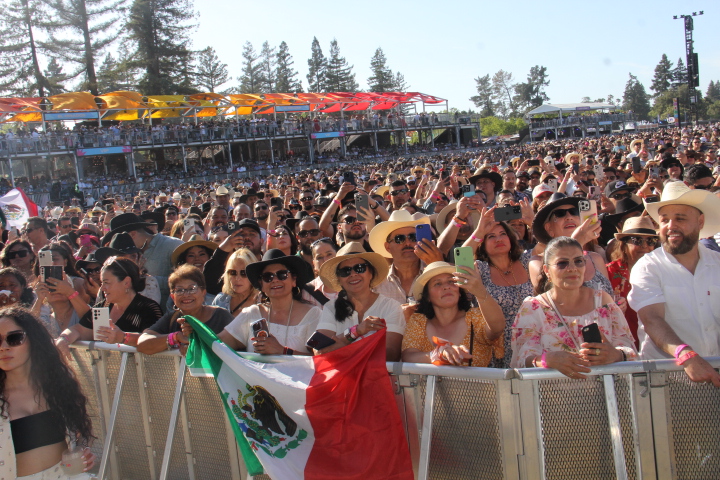
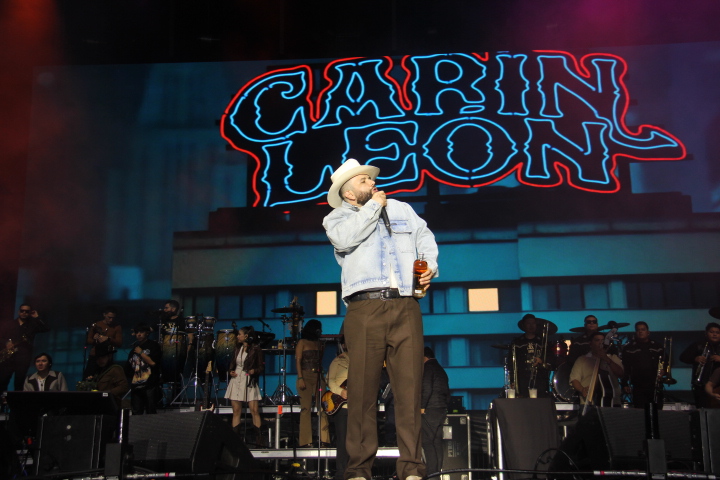
For the second straight year, the festival featured a very impressive, diverse, and multi-generational roster that included Marco Antonio Solis, Banda MS, Pepe Aguilar, Xavi, Tito Double P, Chino Pacas, Camila Fernandez, Los Aptos, Sonora Tropicana, MAR, Edgar Alejandro, Christian Nava, Carín León, Eden Muñoz, Codiciado, Oscar Maydon, Ángelar Aguilar, Clave Especial, Alicia Villarreal, Michelle Maciel, Reyna Tropical, Miguel Cornejo, Erre, Los De La 4, Adriana Rios, Isreal Barajas, among others, including DJs such as Subelo Neo, Caleb Calloway, Mexican Institute of Sound, Cornetto, DJ Lico, Rayben, and Bonnz.
The organizers overcame significant challenges — including the sudden cancellation of two of the main performers, fan-favorite Grupo Firme and new comers Mexican band La Receta because of visa problems. Despite a few setbacks, Bottlerock’s La Onda festival still solidified itself, in my opinion, as the top Latin music festival not just in Northern California but in the country.

The two-day festival was the brainchild of Dave Graham, who along with partners Justin Dragoo, and Jason Scoggins, makes up Latitude 38, the company that has produced and brought to life the BottleRock music festivals for eleven years. Latitude 38 has a head start based on analytics, and data, and knew among other things that Latinos have become California’s largest ethnic group, and Napa’s population is made up of 41 percent Latinos, with the vast majority being Mexican. It is my opinion that this data and previous knowledge were taken into account when deciding to launch an all-Latin music festival.

“There are some great Latin music festivals out there, but none of this scale in Northern California. We live in a wonderfully diverse region, but our Latin communities and those who love Latin music have not had a multi-day festival to call their own. We’re excited to be able to provide that with La Onda,” said Dave Graham, Partner and CEO of Latitude 38 Entertainment, who produced and brought the festival to life.

La Onda also featured mariachi performers and Aztec ceremonies, including performances by Calpulli Anahuak twice daily near the Verizon stage. Their performances included customary rituals such as burning frankincense and drumming.
Among the many beverages and brands showcased were 11 local wines from Latino-owned wineries, including Aldina Vineyard, Bazán Cellars, Ceja Vineyards, Honrama Cellars, MaCo Vineyards, Maldonado Vineyards, RObledo Family Winery, Vintner’s Diary, and Shot Caller Wine Company. These wineries are members of the Mexican American Vintners Association (MAVA), a group that promotes Latino-owned and produced wines.
If you were one of the lucky ones who attended the two-day festival, it quickly became evident that Latitude 38 had done their homework and that everything they had planned worked.

Another big difference, in my opinion, was that the La Onda Latin music festival seemed to have far more sponsors than I’ve seen at other Latin music festivals. This could be because some sponsors carried over from BottleRock, which used the same infrastructure the weekend before La Onda. Or it could be that companies and brands are finally catching up and recognizing the importance of Hispanic demographics and our spending power. The Latino GDP is now estimated at $4 trillion annually, according to figures published by the Latino Donor Collective in a Business Wire press release on May 28, 2025.
“The best way to reach that demographic is through the music—Latin music, in my case,” explains Fredwill Hernandez, a Latin music journalist, consultant, and artist manager who also serves as VP of Artist Relations, Latin, for HITMKR, a direct-to-fan music ecosystem.
“As I stated in my write-up last year on the inaugural La Onda Latin music fest, everything about La Onda just felt different; things were strategically placed and positioned. I was also surprised to see the large skeleton catrinas and dog statues, which are synonymous with the Mexican Día de los Muertos celebration. Having lucha libre wrestling matches is nothing new at Latin music festivals. What did surprise me, though, were the lowrider show cars from San Francisco’s Street Made Car Club, which are synonymous with Chicano and street Cholo culture. La Onda, for example, had a spa, something I’ve never seen at any other Latin music festival.”

Walking around the family-friendly Latin music festival, one of the biggest differences, in my opinion, was that it didn’t feel like a typical festival. It felt more like being at an amusement park or visiting Disneyland. Everything was properly spaced out and carefully curated, with two main stages and three other areas that stood out: the Silent Disco, the Retumba Stage, and the Club.
The Silent Disco and the Club were large rooms with everything you would expect to find at a nightclub: bars, a dance floor, lights, a DJ booth, and booths for sitting and eating. Everything seemed to complement what was nearby. There were also unique attractions, like a ring featuring masked lucha libre wrestlers.
Sixty local eateries offered great food and drinks from Napa Valley, Sonoma County, and the greater Bay Area. They served everything from churros, tortas, tacos, and birria to ceviche, paletas, nachos, and aguas frescas. Among them was Merkado, a San Francisco restaurant that definitely made its presence felt.

The musical lineup was top-notch, featuring reggaeton, EDM, Latin pop, corridos tumbados, cumbia, popular Mexican music, and rancheras. Verizon, which sponsored the Regional Mexican stage—one of the two main stages—also gave select attendees access to an elevated VIP viewing deck near the stage, complete with premium bars, diverse culinary options, comfortable seating, and shade. They could also use convenient corridors between the two main stages to avoid the crowds.

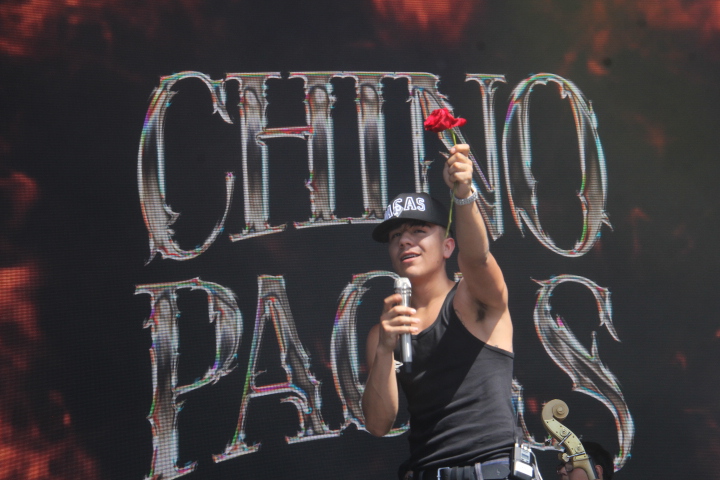
Among the acts performing on the Verizon stage were Christian Nava, Los Aptos, Edgar Alejandro, Chino Pacas, Xavi, Banda MS, Adriana Rios, Erre, Clave Especial, Oscar Maydon, and Tito Double P, who was originally scheduled to perform on Saturday, May 31, but moved to Sunday, June 1, to fill the void left by Grupo Firme’s absence.
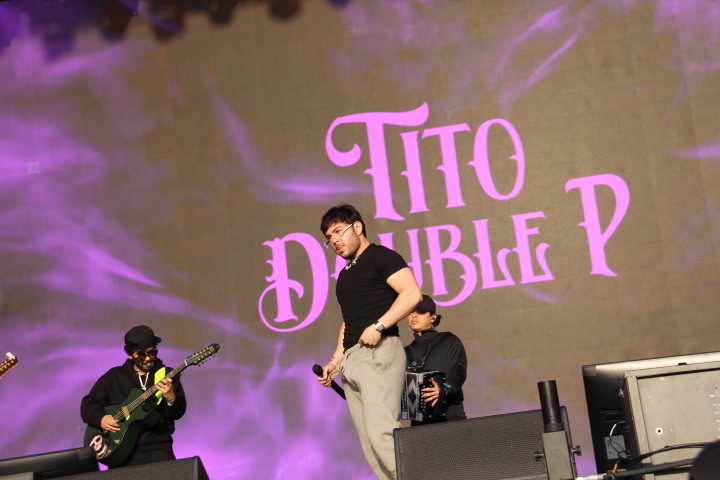
“It’s a full-circle moment for me, coming back to Napa after so many years,” said Christian Nava, the young Regional Mexican singer-songwriter who kicked things off on the first day of the festival at the Verizon stage.
“I was born here in Napa, then I moved to Las Vegas, Los Angeles, Guadalajara, Mexico, so yes, it feels awesome, chingón as the Mexicans say, to come back to Napa as a singer.”
Nava said he had been waiting for a moment like this to release new music. He has recently been getting his feet wet as a songwriter, collaborating on the singles “Chrome Corazón” and “Mi Vida Mi Muerte,” both featured on Neton Vega’s hit album Mi Vida Mi Muerte.

Last year, during the inaugural La Onda festival, young Ranchera heartthrob Alex Fernandez kicked things off as the opening act on the Verizon stage. The grandson of the late Vicente Fernandez, Alex followed in his father’s footsteps by singing Rancheras. Fittingly, his father, Alejandro Fernandez, was on the same bill, returning to the Verizon stage as the headliner to close out the first night.

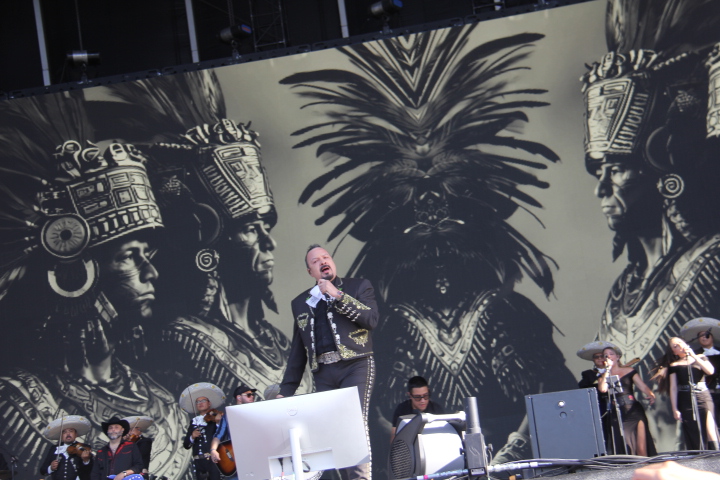
This year, MAR, the daughter of Marco Antonio Solís, took the stage at La Onda, where her father was the main act closing the festival on Saturday, May 31. They weren’t the only father-daughter duo to perform at the same venue by coincidence. Ángela Aguilar, daughter of ranchera singer Pepe Aguilar, appeared on the La Onda stage on Sunday, June 1, a day after her father performed there.
In music, success often depends on perfect timing. I believe La Onda also took advantage of the gap left by Chicago’s Ruidofest, the three-day Latin music event that, from its fourth edition in 2018 through its last in 2022, was regarded by many—including myself—as the nation’s leading Latin music festival. Each year, it featured at least 50 Latin artists over three days. Yet even in its heyday, Ruidofest offered nothing quite like what La Onda offers and curates.
Latitude 38 also recognized the importance of highlighting wines made by Latino winemakers in Napa Valley and nearby California regions. These wines are just as exceptional as, if not better than, many European wines. By supporting one another and sharing Latin music and wine, they gain global recognition through La Onda.
Just seconds after the festival concluded, the dates for the 2026 La Onda Latin music festival were revealed. The event is set to take place on May 30 and May 31, the weekend following the Bottlerock Napa Valley Festival, at the Napa Valley Expo in Napa, California.